
Moving into the fullness of God’s word, where faith is alive and works bear witness that Christ lives within us.
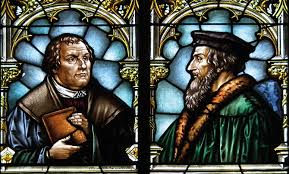
In the sixteenth century, Martin Luther’s call of Sola Fide — salvation by faith alone — was a much-needed cry of freedom. In his day, the institutional Church had chained salvation to a list of prescribed works and ordinances. To be saved, you had to do what they said, in the way they said it, and pay for the privilege. In that climate, faith alone was a declaration of liberty: no priest, no indulgence, no human authority could stand between the believer and the saving grace of God.
But that was then. And we no longer live in that age.
Today, the pendulum has swung so far toward “faith alone” that the other half of the biblical equation is often forgotten. Scripture does not present faith and works as enemies. It presents them as partners — two strands of the same cord.
“Faith without works is dead.” — (James 2:17)
James speaks with urgency: “You see that a person is justified by works and not by faith alone” (James 2:24). He is not contradicting Paul’s proclamation of grace; he is completing it. Works are not the root of salvation, but they are its fruit. If the fruit is missing, the tree is dead.
At the end of all things, the standard is clear. John’s Revelation leaves no doubt:
“And the dead were judged by what was written in the books, according to what they had done.” — Revelation 20:12
Behold, I am coming soon, bringing my recompense with me, to repay everyone for what he has done.” — Revelation 22:12
Salvation begins with faith. But judgment is rendered on works.
Paul urges believers to “work out your own salvation with fear and trembling” (Philippians 2:12). Jesus Himself warns: “Not everyone who says to me, ‘Lord, Lord,’ will enter the kingdom of heaven, but the one who does the will of my Father” (Matthew 7:21).
Faith is the spark that lights the flame. Works are the oil that keeps it burning. Faith alone may ignite the journey, but without works, the fire dies out.
Jesus once declared: “Man shall not live on bread alone, but on every word that comes from the mouth of God” (Matthew 4:4). If faith is the bread, then works are the feast that follows — the living out of every word God has spoken. Bread alone sustains life for a moment. Bread and every word together sustain life for eternity.
Faith and works are like two wings of the same bird. Remove either, and the flight to heaven becomes impossible. Faith alone was the rallying cry of a time when works were corrupted by human greed. But in an age when faith is cheapened into mere belief without action, the rallying cry must change. It must be faith and works — faith proven by what we have done.
If you have faith but never work, the tree never bears fruit. If you work without faith, the tree dries up. But when you keep both in balance — faith feeding the works, works growing from faith — the tree flourishes, bearing fruit in season, and your life becomes a living testimony that matches your faith.
Beyond Luther, what we have is faith that works: the living word made active in us, where faith is transmuted into good works. And those works bear witness that Christ lives. A profession of faith is one thing, but works speak louder than words.
The time for half-truths is over. The Kingdom of God is not a theory — it is life in action. It is a vineyard to be tended, a city to be built, a body to be healed, a harvest to be brought in.
Faith without works is a seed that never breaks the soil. But when faith and works act together, they burst into life — a living testimony that Christ is not just a hope, but a living King who reigns in us now.
The books will be opened. The pages will turn. And what is written there will not be the measure of our faith alone, but what we did with the measure God gave us.
So let us have faith not in thought or word only, but also in deed. Let us lay bricks on the road to heaven with every action, every labor of love. Let us run the race not with empty hands, but bearing the fruit of our faith — works that will bear fruit in others.
And when the Master appears, may He see our faith alive in works, that he may say, “Well done, good and faithful servant.”
